Artist Statement
I am a second-generation mixed race Guyanese Canadian Muslim ceramic artist based in Kjipuktuk/Halifax, Nova Scotia. Through ceramics, installation, sound, and functional objects, I investigate the intersections of cultural identity, migration, memory, and belonging. My practice draws from my lived experience while engaging with the histories of Islamic decorative arts, contemporary craft, and the everyday rituals that shape our understanding of community.
Working primarily with clay, I see the vessel as both a functional object and a metaphor for the body. It carries memory, preserves culture, and records human touch. I am interested in the ways handmade objects become repositories for personal and collective histories, revealing how food, domestic rituals, and acts of gathering can communicate stories that words alone cannot.
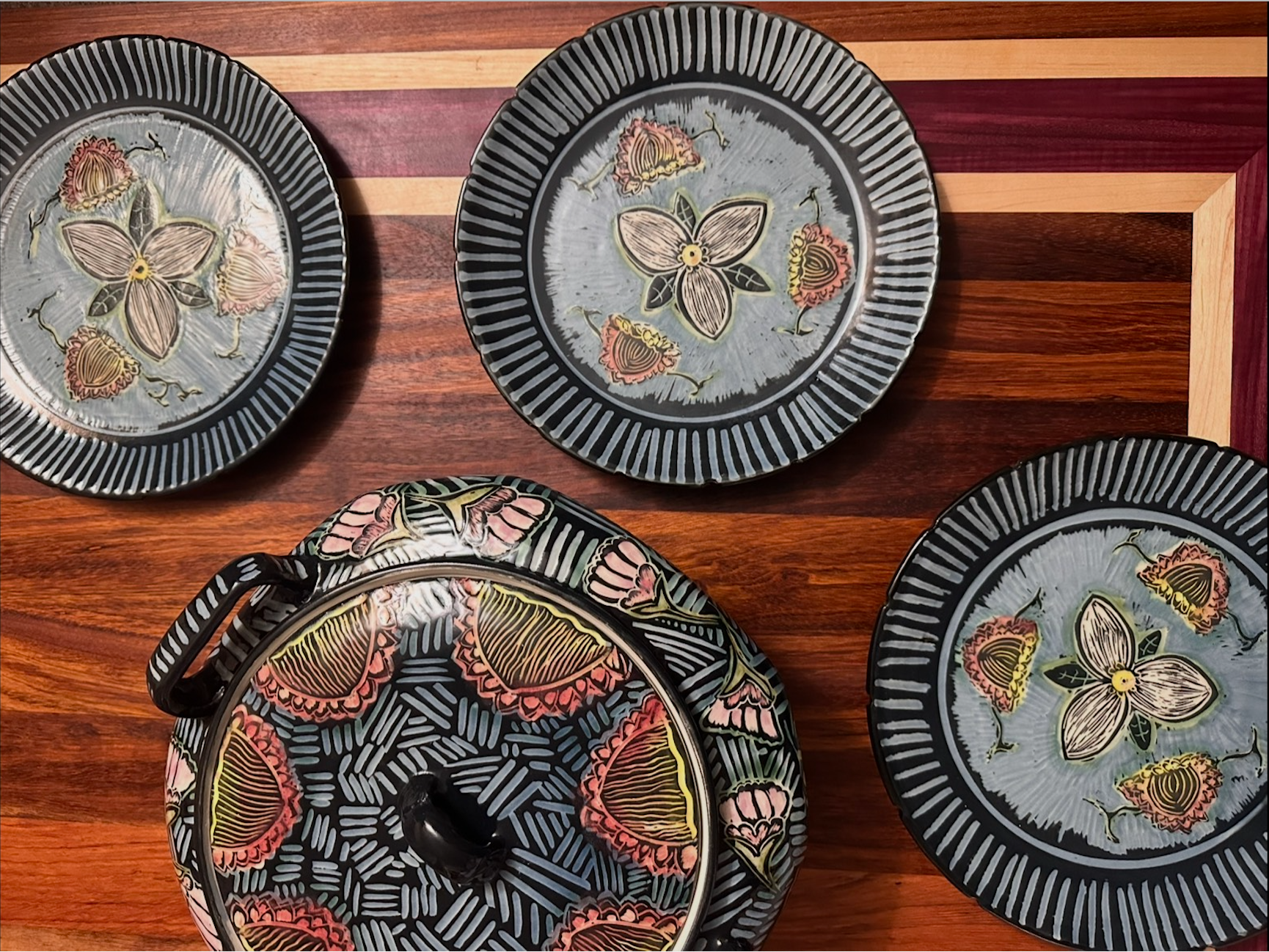
My work frequently explores the tension between beauty and discomfort. Decorative surfaces inspired by historical Islamic ceramics, architecture, and textiles coexist with forms that reference vulnerability, loss, and resilience. In works such as Grammar of War: Remnants, slumped ceramic vessels become quiet memorials to the ongoing effects of Islamophobia, displacement, and violence. More recently, projects including Grandma's Recipes and Breaking Bread investigate food as a language of care, examining how recipes, shared meals, and functional pottery preserve cultural knowledge while creating opportunities for dialogue across communities.
I am interested in expanding the role of ceramics beyond the pedestal, bringing together installation, sound, functional pottery, and participatory experiences to create immersive environments that invite reflection and conversation. Drawing from both historical Islamic craft traditions and contemporary ceramic practice, I seek to create work that honours inherited knowledge while contributing a distinctly personal voice to contemporary craft discourse.
Ultimately, my practice asks how objects can hold memory, foster empathy, and create spaces where difficult conversations become possible. Through making, I hope to transform everyday acts of eating, listening, and gathering into opportunities for cultural exchange, understanding, and human connection.
Artist + Process: Get to know Breaking Bread artist Kaashif Ghanie
The Basics
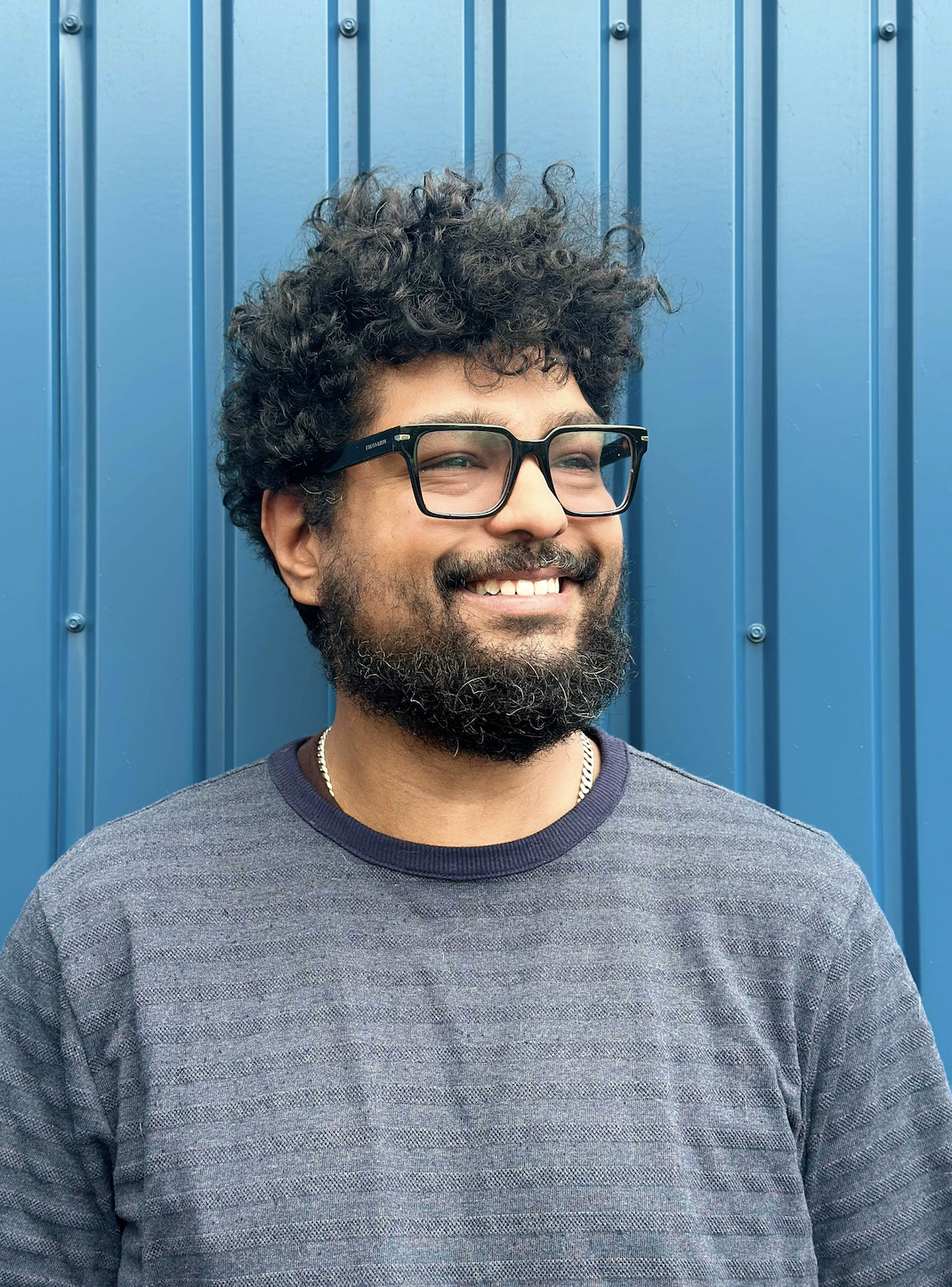
Name: Kaas – Kaashif Ghanie
Location: Kjipuktuk/Halifax – My shared studio is located in Blue Building/Wonder'neath Arts Society
Media/Techniques: Ceramics/Pottery - Mix multimedia
Title of Exhibition: Breaking Bread
Exhibition Dates: Oct 9 – Nov 15, 2026
Opening Reception: Oct 8, 2026, 6PM
The Artist
Q: What has been on your mind lately?
A: The colour blue. I have been thinking a lot about the colour blue and its relationship to ceramics, colonization, aesthetics, and its function within my work. I have also been thinking about how I use blue as both a decorative element and as a background for my vessels.
I am interested in its importance throughout the history of the Silk Road, the movement of materials and ideas, and the grammar of ornament. I think about how “blue and white” ceramics travelled into European kingdoms and eventually became deeply associated with the idea of “fine dinnerware.” These objects and aesthetics were often revered within the homes of colonized and enslaved people throughout Guyana and the Caribbean.
This history makes blue an interesting colour for me. It can represent beauty, aspiration, status, and familiarity, while also carrying histories of trade, colonialism, and cultural exchange. I am interested in how those complicated histories can exist within something as seemingly simple as a colour or decorative pattern.
Q: Can you tell us a bit about yourself and your path to becoming an artist?
A: Out of high school, I had an amazing opportunity to attend H.B. Beal, which has a program called Bealart. As a Bealart alum, I was encouraged to explore many different mediums. At the time, I gravitated toward 3D work, sculpture, and photography.
During my time at NSCAD, in my third year, I decided to switch almost everything I was doing over to ceramics. I had taken an introductory ceramics course and was introduced to wheel throwing. I picked up the initial skills and was hooked. From that point on, I shifted my practice entirely toward ceramics.
I graduated from NSCAD University in 2016 with a BFA in Ceramics and a minor in Art History. During my studies, I had the opportunity to work with artists and educators including Neil Forrest, Joan Bruneau, Rachel De Conde, Rory Macdonald, and Doug Bamford.
Following graduation, I completed two NSCAD summer residencies, the Centre for Craft AIR Residency (2017–2018), the CEED Business Program (2019), and the Canadian Clay & Glass Gallery’s TD Residency for Black, Indigenous, and Underrepresented Peoples and Communities (2024). In 2024, I also received the Arts Nova Scotia Emerging Artist Award.
The Process
Q: What draws you to the materials or processes you use?
A: Clay is incredibly malleable. It allows me to move between functional pottery and sculpture, and to use form, imagery, and shape to emphasize concepts within my work.
I am also drawn to the history embedded within ceramics. Vessels have been used across cultures for thousands of years to hold food, water, objects, and stories. That connection between function, history, and everyday life is something I continually return to.
My family heritage is another important part of this. I enjoy looking at the history of ceramics and vessels and finding connections between those histories and my own experiences as a Guyanese Canadian. Clay gives me a way to explore those connections physically, while also allowing the work to remain useful, familiar, and accessible.
Q: Do you listen to anything while you work? Have any music/podcast recommendations?
A: This really depends! When I’m in workhorse mode, Lady Gaga can definitely get me into production mode. For podcasts, I love video game lore, especially World of Warcraft. I also listen to a lot of CBC podcasts, including The Debaters, Front Burner, Because News, and The Big Five. For the clay nerds, For Flux Sake is a great ceramics podcast. I also enjoy Dungeons and Daddies and Ologies, which is a great science podcast.
The Practice
Q: What questions are you exploring in Breaking Bread?
A: Breaking Bread is both a personal and collective project. It functions as a self-portrait grounded in my lived experience as a Muslim Guyanese Canadian navigating Islamophobia, racism, and cultural misrepresentation, while also creating a space for invitation, reflection, and connection.
Using the familiar ritual of sharing a meal, the exhibition establishes a welcoming ground for dialogue. Iam interested in creating a space where visitors from different backgrounds and lived experiences can engage with difficult histories and contemporary realities through generosity, hospitality, and conversation.
The exhibition also asks how food, family, and cultural traditions can become forms of resistance and preservation. My grandmother’s recipes and the vessels I am creating from them connect me to my own history, while the larger installation considers the experiences of Muslims and other marginalized communities.
At its core, Breaking Bread asks how we can come together despite our differences, and how something as simple as sitting down and sharing a meal can create opportunities for empathy, understanding, and connection.
Q: Is there a particular work or aspect of Breaking Bread that stands out to you? If so, why?
A: I have not actually seen the whole installation together yet. That, in itself, is probably what I am most excited about.
The work currently exists as multiple individual pieces that I have been making, collecting, and developing over time. Seeing all of those individual works come together as one larger installation will be a pretty big accomplishment for me.
I think there is something really powerful about that transition—from making individual vessels in the studio to seeing them collectively occupy a space and become something larger than themselves.
I am especially interested in how the different elements of Breaking Bread will interact: the melted vessels on the walls, the prayer-rug formation, the dinnerware inspired by my grandmother’s recipes, and the dining table at the centre of the space.
Individually, each piece carries its own history and meaning. Together, I hope they create an environment that feels immersive and emotionally layered. I’m looking forward to experiencing the work almost as a visitor would for the first time.
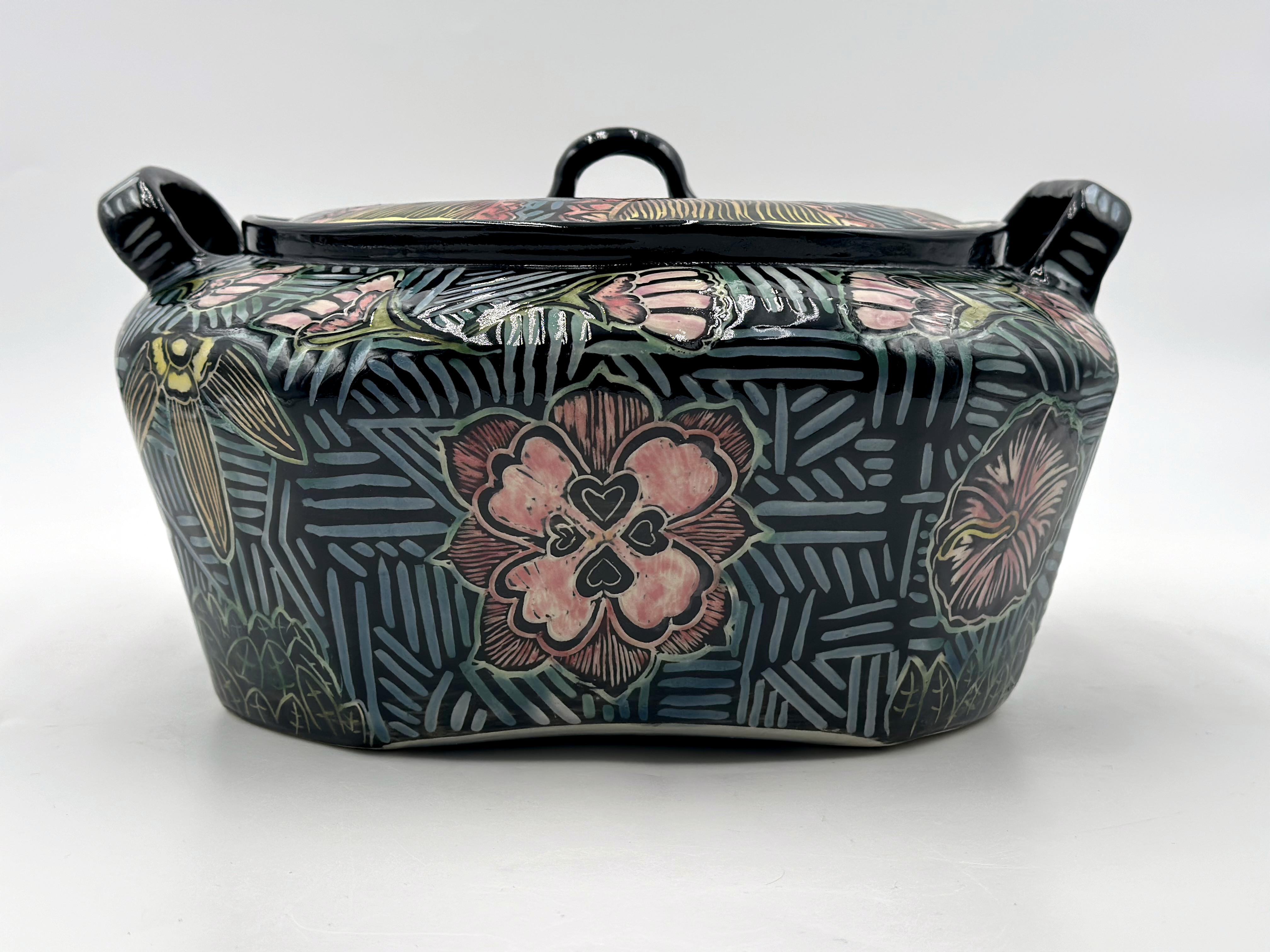
Kaashif Ghanie
Square Kharhi
Ceramic